MY STORY
Two hundred metres from the finish line, my body tapped out.
Every reset starts with a moment of truth. This is mine, and it's why I do what I do.
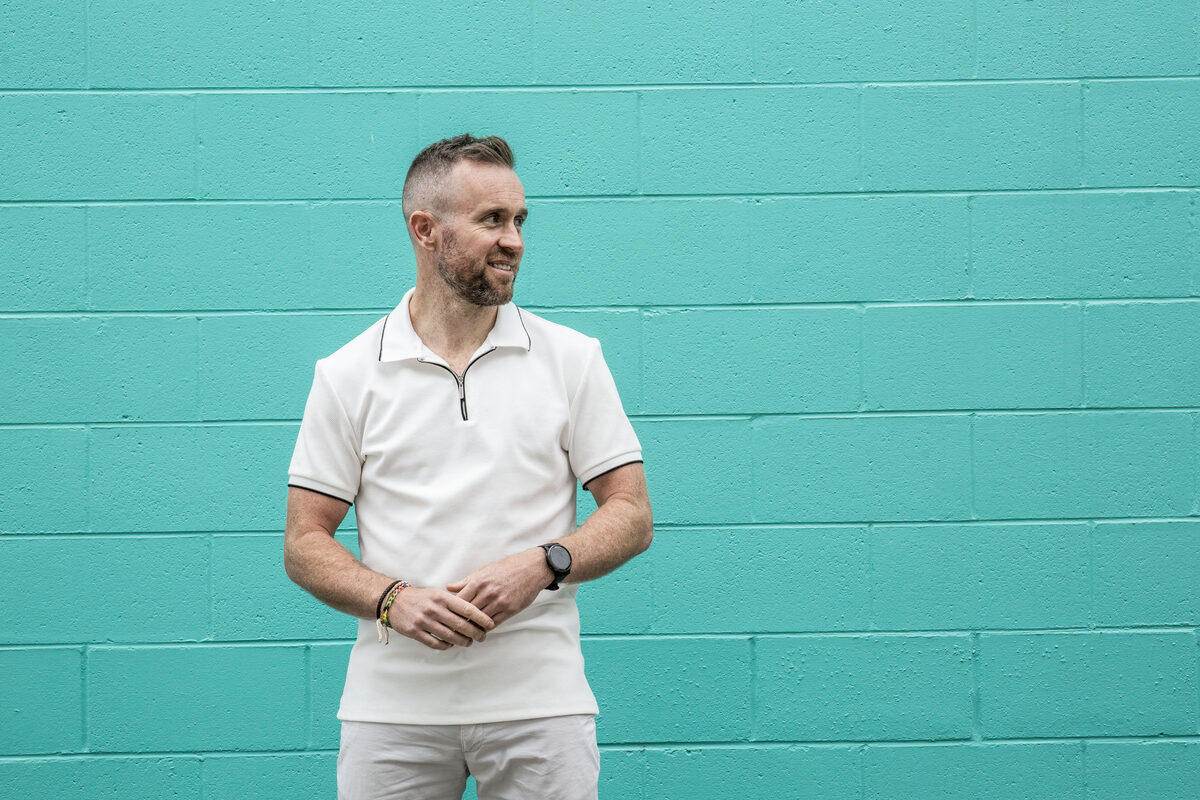
Every reset starts with a moment of truth. This is mine, and it's why I do what I do.
It was a scorching hot day, and I was pumped to take on an annual charity run with my mates. Banter was flying, egos were soaring, and the finish line was calling. It wasn't just about the run for me. It was about proving to myself that I was good enough. But my body had other plans.
Not far from the finish line, my body tapped out. It wasn't a polite tap on the shoulder; it was a full-blown shutdown. I hit the ground and drifted in and out of consciousness. When I came to, I couldn't speak or breathe properly. The ambulance officers later told me they couldn't even get a blood pressure reading as they rushed me into Emergency.
Days of tests and a blunt heart specialist confirmed what I wasn't ready to hear: my body had literally hit its limit. If I'd kept going, I would have gone into cardiac arrest. "You wouldn't be here." That sentence haunted me.
I thought surviving that moment was the hard part. Turns out, it was just the beginning.
At first, the panic attacks came when I tried to run again. Then they crept into everyday life. At the playground with my daughter, mid-conversation with friends, visiting my parents, working on my business. Out of nowhere: tight chest, racing heart, that awful feeling of being trapped in my own body.
On Christmas Eve I hit rock bottom, sitting in a medical centre, desperate for someone to fix me. I slid into a depression that questioned every part of my identity. My relationships felt strained, I lost passion for my business, and the things I used to love, like exercise, socialising and even time with my kids, felt impossible. A PTSD diagnosis helped me understand what was happening. Then Covid hit.
I was constantly bouncing between wired and overwhelmed, then completely drained and shut down. I was hiding how I felt from my family, my work and my clients, but I was showing up in fight, flight or freeze.
"Growth doesn't happen just by working harder; it starts when you give yourself permission to stop running and start listening."Chris Mahoney, RESET
There came a point where I had no choice but to stop. The push-through-no-matter-what mindset stopped working. I couldn't outrun it. It was bloody hard. But stopping and learning how to reset saved me.
Up until then, I thought the answer was to push through, do more, try harder. That just made it worse. What I needed first was to Lean Out: to pause, breathe and reset my nervous system. From there, I could Lean In, not from stress or pressure, but from calm and clarity, into what actually mattered.
Leaning In while dysregulated. Reacting, avoiding, overthinking. Rest was something you earned.
Lean Out first to find calm and clarity. Then Lean In to what matters, with intention.
That's when I discovered breathwork. Listening to the Owaken Podcast, I heard Lukis Mac and Helle Weston describe exactly what I'd been going through: the panic, the over-breathing, the disconnect. For the first time, it made sense. I backed myself and trained as a Certified Trauma-Informed Breathwork Facilitator, not just to learn it, but to embody it.
It wasn't an overnight fix. But my breathing slowed, the tightness in my chest eased, and for the first time in a long time, I felt lighter, clearer and more like me again. Everything I now teach through Reset Within started to take shape from there.
I know what it's like to live in survival mode, and I know what it's like to find your way out of it. Life still has its ups and downs. What changed is that I have a compass to come back to: knowing when to Lean In and when to Lean Out.
I'm a husband and a dad of two, and my kids make life a true Lean In, Lean Out experience. The values I come back to every day:
Health, wellbeing and personal training, including years working with people living with disabilities, from cerebral palsy and ABI to Down syndrome.
Certified Trauma-Informed Breathwork Facilitator through Owaken. I now teach breathwork facilitation courses too.
The Lean In Lean Out method in full, used by individuals, leaders, parents, psychologists and school principals.
You don't have to push through it alone. Tell me what's going on and we'll find the right place to start.